


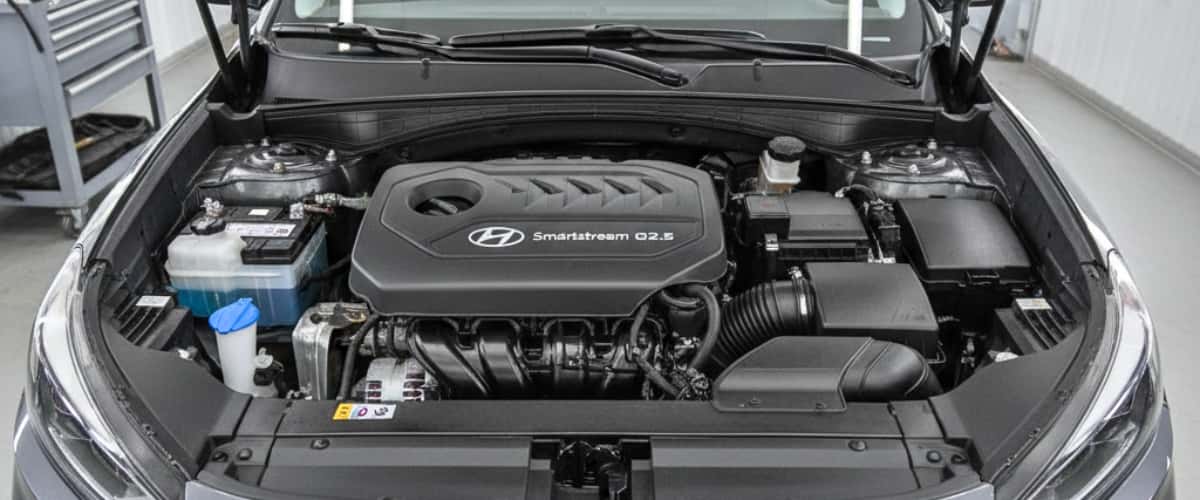
For a first-time Hyundai Tucson owner in St. Joseph, MO, figuring out when to schedule an oil change or a brake fluid flush can feel like guesswork — especially with the Tucson Hybrid joining more driveways across Buchanan County. Reed Hyundai of St. Joseph built this guide to spell out every factory-recommended interval, from routine oil changes to hybrid-specific battery cooling checks, so drivers commuting along I-29 and US-36 know exactly what their Tucson needs and when.
Key Takeaways
- The 2026 Hyundai Tucson needs an oil and filter change every 7,500 miles (5,000 miles under severe conditions) using 0W-20 full synthetic oil.
- Tire rotations are due every 7,500 miles, which is critical for protecting AWD Tucson drivetrain components from uneven tread wear.
- Brake fluid should be replaced every 30,000 miles or 2 years, whichever comes first.
- The Tucson Hybrid adds a battery cooling system inspection every 30,000 miles and an inverter coolant replacement every 60,000 miles.
- Hyundai Complimentary Maintenance covers Hyundai-approved oil changes, tire rotations, and multi-point inspections for 3 years or 36,000 miles.
Every 2026 Hyundai Tucson — gas or hybrid — follows a factory-set schedule built around mileage and time intervals, whichever comes first. Below is every interval a Tucson owner in the Reed Hyundai of St. Joseph service department handles, in the order it typically comes due.
How Do St. Joseph Driving Conditions Affect Your Tucson's Maintenance Schedule?
Most Tucson owners in St. Joseph and Savannah split time between highway commutes on US-36 and shorter in-town trips, which puts many drivers on the boundary between Hyundai's two maintenance tracks. Knowing which track applies determines how often you're in the service bay.
Normal vs. Severe Service Schedules Explained
Normal conditions apply to mostly highway or suburban driving in moderate temperatures with little towing. Severe conditions apply if you regularly make short trips under 10 miles, sit in stop-and-go traffic, drive dusty or gravel roads, tow a trailer, or face extreme heat or cold — all common in North Missouri.
Why Midwest Winters, Road Salt, and Gravel Roads Push Many Owners to the Severe Schedule
Midwest winter freezing and road salt exposure accelerate corrosion on brake components, tires, and undercarriage hardware, and gravel roads outside St. Joseph add extra grit to filters and brake surfaces. Because of this, most local Tucson owners are better served following the severe-condition intervals rather than the normal-condition ones, even if they only meet one or two of the severe criteria.
How Often Should You Change the Oil and Rotate the Tires on a Tucson?
Whether you just picked up your first Tucson or you're a longtime Hyundai owner replacing an older model, oil changes and tire rotations are the two most frequent service visits you'll make.
How often should I change the oil in a Hyundai Tucson?
Hyundai recommends an engine oil and filter change every 7,500 miles or 12 months under normal conditions, using 0W-20 full synthetic oil that meets API SP or ILSAC GF-6 specifications. Under severe conditions the interval shortens to 5,000 miles or 6 months.
What is the tire rotation interval for a Hyundai Tucson?
Rotate tires every 7,500 miles to equalize tread wear across all four positions. On AWD Tucson models, a tread depth difference greater than 2/32 inch between front and rear tires can stress the all-wheel-drive coupling, so staying on schedule protects those drivetrain components.
Why 0W-20 Full Synthetic and Correct Specs Protect Your 10-Year Powertrain Warranty
Using oil below the required specification can void warranty coverage if engine damage occurs — a real risk given the Tucson's 10-year/100,000-mile Powertrain Limited Warranty. Reed Hyundai's technicians use Hyundai-approved fluids on every visit so that coverage stays intact.
What Services Are Due at 15,000, 30,000, and 60,000 Miles?
Beyond oil and tires, the Tucson has a handful of milestone services that come due at longer intervals.
When should I replace the brake fluid in a Hyundai Tucson?
Hyundai recommends brake fluid replacement every 30,000 miles or 2 years, whichever comes first. Brake fluid absorbs moisture over time, which lowers its boiling point and can reduce braking performance under hard stops — a flush and refill with DOT 4 fluid typically runs $100–$150 at a dealership.
Cabin Air Filter, Engine Air Filter, and Brake Inspections
The cabin air filter is due every 15,000 miles and typically costs $20–$35 to replace; drivers on gravel roads around Cameron or Savannah may need it sooner. The engine air filter is inspected and typically replaced around 30,000 miles, and a full brake inspection also falls at the 15,000-mile mark.
Spark Plugs, Coolant, and Drive Belt Checks at 60,000+ Miles
At 60,000 miles, expect spark plug replacement, a transmission fluid inspection, and a drive belt check. Engine coolant is rated for 120,000 miles on the first fill, then every 60,000 miles after — use only Hyundai-approved coolant, since mixing types can cause corrosion in the cooling passages.
Does the Tucson Hybrid Have Different Maintenance Requirements?
Yes — the Tucson Hybrid shares most of the standard schedule but adds a few systems tied to its electrified powertrain, and Reed Hyundai's service team handles all of them alongside routine oil changes, alignments, and tire service.
Battery Cooling System Inspection Every 30,000 Miles
The hybrid battery uses an air-cooling system with an intake filter that pulls cabin air. A clogged filter reduces cooling efficiency and can accelerate battery degradation, so it's checked at every 30,000-mile interval.
Inverter Coolant and Engine Coolant Intervals
The hybrid's inverter and converter use a separate coolant circuit that's replaced every 60,000 miles to maintain proper heat dissipation, in addition to the standard engine coolant schedule described above.
Why Regenerative Braking Still Requires 15,000-Mile Brake Inspections
Regenerative braking on the Tucson Hybrid can stretch pad life to 60,000–80,000 miles versus 30,000–50,000 miles on the standard model, but reduced friction-brake use can lead to rotor corrosion and uneven pad deposits. A 15,000-mile inspection makes sure the friction brakes are ready when you need them.
Do gas and hybrid Tucson models use the same oil change interval?
Yes — both follow the same 7,500-mile (or 5,000-mile severe) interval, though hybrid owners making frequent short trips under 10 miles may want to lean toward the shorter severe schedule.
Is a wheel alignment part of the Tucson's scheduled maintenance?
An alignment isn't on the fixed mileage schedule, but Reed Hyundai's service team recommends one anytime you notice uneven tire wear or pulling, which can follow the same seasonal road conditions covered above.
What Do Hyundai Complimentary Maintenance and Warranty Coverage Include?
New Tucson buyers get built-in coverage that offsets several of the intervals above.
3-Year/36,000-Mile Complimentary Oil Changes, Tire Rotations, and Inspections
Hyundai Complimentary Maintenance covers Hyundai-approved oil and filter changes, multi-point inspections, and tire rotations for 3 years or 36,000 miles, whichever comes first (electric and fuel-cell models are excluded from the oil change portion).
5-Year/60,000-Mile New Vehicle and 10-Year/100,000-Mile Powertrain Warranties
Hyundai backs every Tucson with a 5-year/60,000-mile New Vehicle Limited Warranty and a 10-year/100,000-mile Powertrain Limited Warranty, plus 5 years of 24-hour roadside assistance with unlimited miles. Staying current on the intervals above keeps that coverage valid.
Sources
Frequently Asked Questions
How often should I change the oil in a Hyundai Tucson?
Hyundai recommends engine oil and filter changes every 7,500 miles or 12 months under normal driving conditions. Under severe conditions — frequent short trips, dusty roads, extreme temperatures, or heavy towing — the interval shortens to 5,000 miles or 6 months.
Does the Tucson Hybrid have different maintenance requirements?
Yes. The Tucson Hybrid adds battery cooling system inspections, hybrid-specific coolant service, and inverter coolant replacement to the standard maintenance schedule. Regenerative braking reduces brake pad wear, but the pads and rotors still need inspection every 15,000 miles because reduced use can lead to corrosion.
When should I replace the brake fluid in a Hyundai Tucson?
Hyundai recommends brake fluid replacement every 30,000 miles or 2 years, whichever comes first. Brake fluid absorbs moisture over time, which lowers its boiling point and can compromise braking performance.
What is the tire rotation interval for a Hyundai Tucson?
Rotate tires every 7,500 miles to equalize tread wear across all four positions. For AWD Tucson models, consistent tread depth is especially important because significant differences between tires can stress the all-wheel-drive system and lead to premature component wear.
Does skipping scheduled maintenance void my Hyundai warranty?
Missing an oil change here or there won't automatically void coverage, but Hyundai requires that maintenance be performed according to the published schedule using approved parts and fluids. Keeping service records from a facility like Reed Hyundai of St. Joseph is the simplest way to protect your warranty claim.
Schedule Tucson Service at Reed Hyundai of St. Joseph
Whether you're due for a routine oil change, a 30,000-mile brake fluid flush, or hybrid battery cooling inspection, Reed Hyundai of St. Joseph's factory-trained technicians use genuine Hyundai parts on every visit. Schedule your Tucson's next service appointment online before winter conditions arrive, browse the current Tucson and Tucson Hybrid inventory, or value your trade if you're ready to upgrade. Stop by 4525 Commons Drive in St. Joseph, MO, or get directions to the showroom on Google Maps.