


Key Takeaways
- Hyundai's owner's manual calls for inspecting brake pads, fluid, and lines every 8,000 miles or 12 months, with more frequent checks recommended for drivers exposed to winter road salt.
- Hyundai brake pads typically last between 30,000 and 70,000 miles, depending on driving style and vehicle weight.
- Squealing, grinding, vibration, a soft pedal, or an illuminated brake warning light all mean it's time for a professional look.
- Catching worn pads early protects rotors and calipers from costly damage down the road.
- Reed Hyundai of St. Joseph offers a free brake inspection and provides a written estimate before any work begins.
For a Hyundai owner in St. Joseph, MO, brakes work harder than the owner's manual assumes — North Missouri winters bring freezing temperatures and road salt that accelerate corrosion on lines, calipers, and rotors. Whether you're driving a Tucson on the school run or a Palisade loaded up for a family trip, staying ahead of brake wear is one of the simplest ways to protect your investment. Reed Hyundai of St. Joseph walks local drivers through exactly how often brakes need attention and what to watch for between visits.
Why Do St. Joseph Winters and Road Salt Make Brake Inspections So Important?
Salt and moisture from winter storms are the biggest reason brake components wear faster than the calendar suggests. Road crews across St. Joseph and Buchanan County apply salt to keep I-29, US-36, and MO-6 passable, and that same salt clings to brake lines and calipers underneath your Hyundai. Combined with melting snow, moisture and salt can accelerate corrosion of brake and fuel lines over a Midwest winter. Drivers commuting between St. Joseph, Savannah, and Platte City on salted highways should treat a spring brake check as routine, not optional.
How Often Should Hyundai Owners Have Their Brakes Inspected?
Per Hyundai's published maintenance schedule, brake pads, fluid, and lines should be inspected every 8,000 miles or 12 months. Owners driving through salty, wet Missouri winters should consider a mid-cycle check around the six-month mark, since corrosion and grit don't wait for the odometer to catch up.
That same schedule calls for brake fluid inspection every 8,000 miles or 12 months, with a full fluid replacement recommended every 48,000 miles or 48 months. Sticking to this rhythm matters because worn pads left unchecked wear down to bare metal, which then scores rotors and can damage calipers — turning a simple pad swap into a much larger repair.
How Long Do Hyundai Brake Pads Typically Last?
Most Hyundai brake pads last somewhere between 30,000 and 70,000 miles, though the exact number depends heavily on how and where you drive. A first-time Palisade or Santa Fe owner commuting mostly on the highway between Savannah and St. Joseph will typically see pads last toward the higher end of that range. Stop-and-go city driving, frequent short trips, and the added weight of a fully loaded three-row family SUV all wear pads faster, since the brakes work harder and more often to bring a heavier vehicle to a stop.
What Warning Signs Mean Your Hyundai Needs Brake Service Now?
A high-pitched squeal is usually the first alert — Hyundai brake pads include a small metal wear indicator that produces a screeching sound once the pad material is worn thin. Don't ignore it; it's designed to be heard before damage sets in.
Beyond squealing, watch for grinding (metal-on-metal contact), a pulsing or vibrating brake pedal, a pedal that feels softer or sinks lower than usual, and noticeably longer stopping distances. If the brake warning light on the dash illuminates, that's your Hyundai telling you the system needs immediate attention rather than a wait-and-see approach.
What Should You Expect During a Professional Brake Inspection?
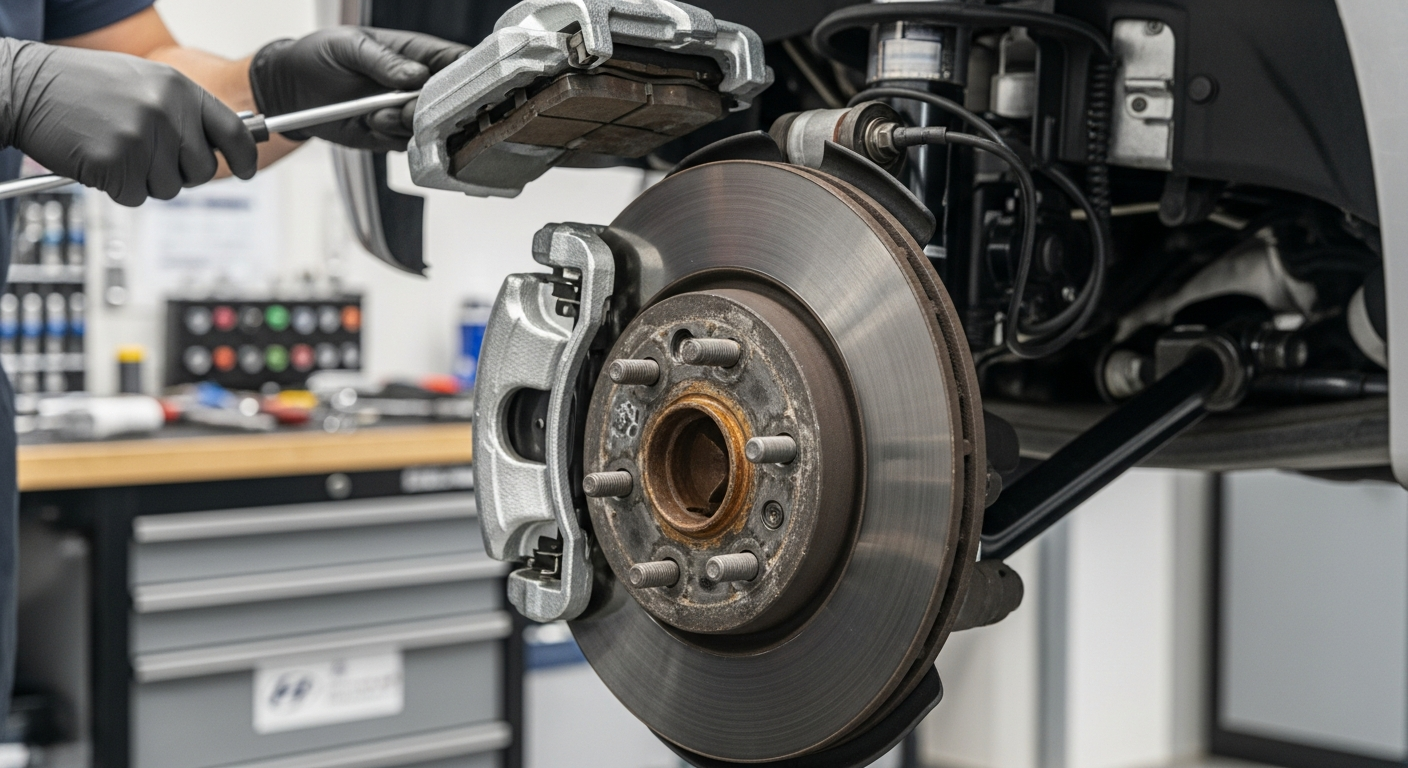
A thorough inspection covers pad thickness on all four wheels, rotor condition and thickness, brake fluid level and clarity, and the lines and hoses for cracking, leaks, or corrosion — the same items called out in Hyundai's official maintenance schedule. Technicians also check caliper operation and parking brake function while the wheels are off.
Reed Hyundai of St. Joseph's factory-trained technicians perform a free brake inspection and provide a written estimate before any repair work begins, so you know exactly what's needed and why before approving service. You can schedule a brake inspection online in a few minutes, and if pads or rotors do need replacement, genuine parts and factory-trained labor keep the job done right the first time.
Does towing or hauling affect brake wear?
Yes — added weight from cargo, passengers, or towing increases the load on your brake system, which can shorten pad life. Owners who regularly haul heavier loads should lean toward the more frequent end of the inspection schedule.
Can I drive on squealing brakes for a while longer?
It's not recommended. The squeal is a built-in wear indicator warning that pad material is nearly gone; continuing to drive risks rotor damage and reduces stopping power exactly when you need it most.
Sources
- Hyundai Owner's Manual — Maintenance Schedule
- FOX2Now — How Road Salt May Damage Vehicles
- Coughlin Hyundai — Signs Your Hyundai Needs Brake Repair
Frequently Asked Questions
How often should Hyundai owners have brakes inspected?
Hyundai's maintenance schedule recommends inspecting brake pads, fluid, and lines every 8,000 miles or 12 months. Owners in St. Joseph and surrounding North Missouri communities should consider an additional check partway through winter, since road salt and moisture speed up wear on lines and calipers.
What is the typical lifespan of Hyundai brake pads?
Most Hyundai brake pads last between 30,000 and 70,000 miles. Highway commuters tend to see pads last longer, while frequent city driving, stop-and-go traffic, and heavier three-row SUVs shorten that range considerably.
What warning signs indicate brake problems?
Squealing, grinding, a vibrating or pulsing pedal, a soft or low-feeling brake pedal, longer stopping distances, and an illuminated brake warning light are all signs your Hyundai needs professional attention soon rather than later.
Why is early brake detection important for cost savings?
Catching worn pads before they wear down to metal protects rotors and calipers from additional damage. A simple pad replacement is far less costly than repairing scored rotors or damaged calipers that result from delaying service.
Are brake inspections really free at Reed Hyundai of St. Joseph?
Yes. Reed Hyundai of St. Joseph provides a complimentary brake inspection and follows it with a written estimate before any recommended work begins, so St. Joseph and Savannah area drivers can make an informed decision with no surprises.
Schedule Your Free Brake Inspection at Reed Hyundai of St. Joseph
Don't wait for a squeal to become a grind. Reed Hyundai of St. Joseph makes it easy to schedule a free brake inspection ahead of the next Midwest winter, and if you're shopping for a Hyundai with confidence-inspiring stopping power, browse the current new Hyundai SUV lineup available now. Stop by our showroom at 4525 Commons Drive or get directions to Reed Hyundai of St. Joseph on Google Maps — and let's get your brakes winter-ready before the next North Missouri cold front rolls in.