


Key Takeaways
- The 2026 Hyundai Tucson SE starts at $29,450, roughly $1,500-2,000 less than comparable Toyota RAV4 trims.
- Hyundai backs the Tucson with a 10-year/100,000-mile powertrain warranty, twice the RAV4's 5-year/60,000-mile coverage.
- The Tucson Hybrid produces 231 hp and 271 lb-ft of torque for confident merging and passing on I-29.
- The Tucson offers 74.8 cubic feet of max cargo space with the seats folded, ahead of the RAV4's 69.8 cubic feet.
- Both the 2026 Tucson and RAV4 earn IIHS Top Safety Pick+ ratings with comprehensive standard driver-assist suites.
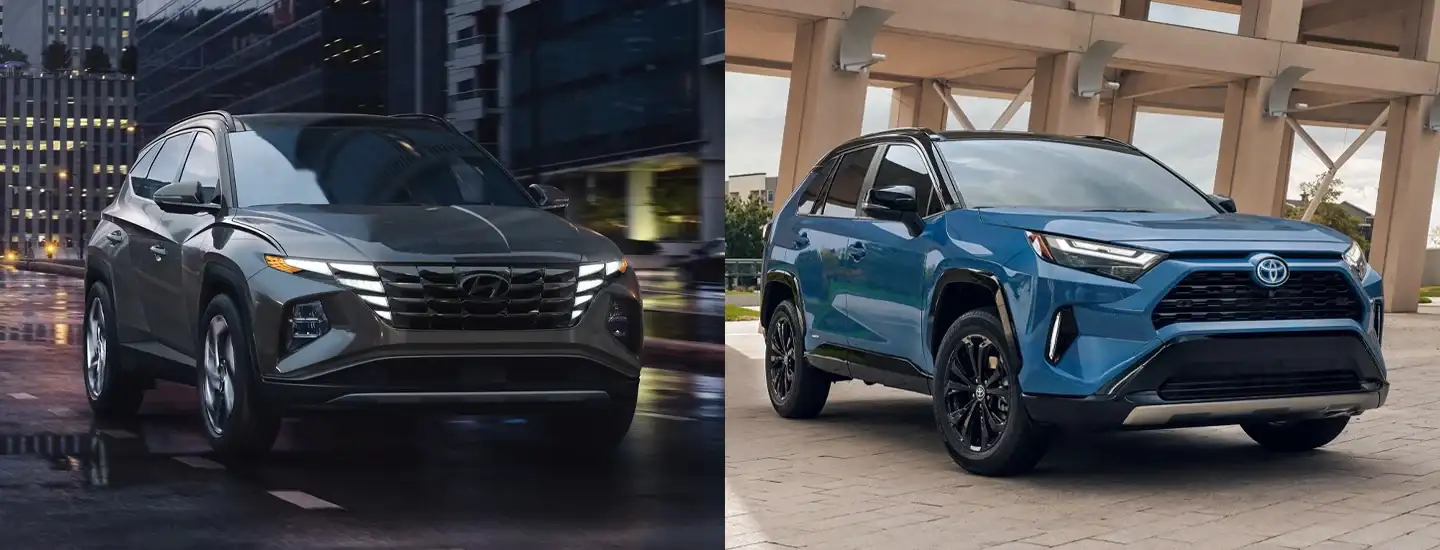
Shoppers across St. Joseph, Savannah, and Buchanan County cross-shop the Hyundai Tucson and Toyota RAV4 more than almost any other pair of compact SUVs. At Reed Hyundai of St. Joseph, we walk buyers through this comparison daily, from I-29 commuters heading into Kansas City to families packing gear for a weekend at Watkins Mill State Park. The differences that matter most come down to price, warranty coverage, and how each SUV drives day to day.
Which Compact SUV Fits Family Driving Around St. Joseph and North Missouri?
Both the Tucson and RAV4 handle the mix of city streets, county gravel roads, and I-29 highway miles that define driving around St. Joseph and Buchanan County. The Tucson's lower starting price and longer factory warranty make it the more budget-conscious choice for families who keep a vehicle long term.
North Missouri winters bring freezing temperatures and heavy road salt that gradually stress a vehicle's undercarriage, and Buchanan County's spring storms add hail risk on top of that. Reed Hyundai of St. Joseph's factory-trained technicians recommend routine maintenance to protect the Tucson's drivetrain through both seasons — schedule service online anytime.
Which Gets Better Fuel Economy — the Tucson Hybrid or RAV4 Hybrid?
The RAV4 Hybrid holds the fuel-economy edge at an EPA-estimated 41 mpg combined versus the Tucson Hybrid's 36 mpg combined, saving roughly $170 a year over 15,000 miles at $3.50 a gallon. The Tucson Hybrid answers with 231 horsepower and 271 lb-ft of torque against the RAV4 Hybrid's 219 hp, giving it stronger acceleration for merging and passing on I-29.
Family SUV owners logging long highway stretches — a Savannah-to-St. Joseph commute or a weekend drive toward Kansas City — often value the Tucson Hybrid's extra torque over the RAV4's few additional miles per gallon, while buyers focused purely on minimizing fuel stops may lean toward the RAV4 Hybrid.
How Do Pricing, Trims, and Warranty Coverage Compare?
Yes, the Tucson is the more affordable compact SUV: the 2026 Tucson SE starts at $29,450 while the RAV4 LE starts at roughly $32,000. The gap holds at the hybrid level too — Tucson Hybrid Blue near $34,000 versus RAV4 Hybrid LE at roughly $35,000.
Hyundai also backs the Tucson with a 5-year/60,000-mile basic warranty and a 10-year/100,000-mile powertrain warranty, compared with the RAV4's 3 years/36,000 miles basic and 5 years/60,000 miles powertrain coverage. That extra protection matters most on hybrid models, where the electric motor, inverter, and high-voltage battery are the priciest components to repair.
At the SEL trim (~$33,000), the Tucson adds dual 10.25-inch screens, heated front seats, and blind-spot collision avoidance — features that require the RAV4 XLE Premium (~$36,000) to match. Fully loaded, the Tucson Limited (~$38,500) undercuts the RAV4 Limited (~$40,000) by roughly $1,500 while adding a head-up display and Highway Driving Assist II.
Which SUV Has More Cargo Space and Better In-Cabin Tech?
The Tucson offers 38.7 cubic feet of cargo space behind the rear seats and 74.8 cubic feet with the seats folded, versus the RAV4's 37.5 cubic feet and 69.8 cubic feet. The Tucson's dual 10.25-inch digital displays also give its cabin a more modern layout than the RAV4's dashboard, and wireless Apple CarPlay and Android Auto come standard from the SEL trim up.
Families comparing cargo space for strollers, sports gear, or a weekend trip to Watkins Mill State Park can browse Reed Hyundai's new Tucson inventory to compare trims side by side.
How Do the AWD Systems and Safety Features Handle Missouri Weather?
The Tucson's HTRAC all-wheel-drive system includes dedicated terrain modes for snow, mud, and sand, while the RAV4 Hybrid pairs its gas engine with an electric motor on the rear axle for instant torque. Both systems deliver confident traction on the gravel roads and highway on-ramps around St. Joseph.
Either AWD system also holds up on longer regional drives — hauling gear toward Truman Lake, a boat trip to the Lake of the Ozarks, or a family outing to Watkins Mill State Park. The Tucson's added cargo room and terrain-mode AWD make it the easier vehicle to load and drive on these trips.
Both the 2026 Tucson and RAV4 earn IIHS Top Safety Pick+ ratings with "Good" crashworthiness scores and standard forward collision avoidance with pedestrian detection — neither vehicle holds a meaningful safety edge over the other.
Sources
Frequently Asked Questions
Which gets better fuel economy — the Tucson Hybrid or RAV4 Hybrid?
The Tucson Hybrid leads on power, warranty, and price: 231 hp, 271 lb-ft of torque, a 10-year/100,000-mile powertrain warranty, and a lower starting price than the RAV4 Hybrid. The RAV4 Hybrid holds an EPA-estimated mpg edge — 41 combined versus 36 — a trade-off worth weighing against the Tucson's stronger acceleration and coverage.
How do the Tucson and RAV4 warranties compare?
The Tucson comes with a 5-year/60,000-mile basic warranty and a 10-year/100,000-mile powertrain warranty. The RAV4 offers 3 years/36,000 miles basic and 5 years/60,000 miles powertrain. Hyundai's coverage lasts twice as long on the powertrain, which matters most for hybrid components like the electric motor, inverter, and battery pack.
Which compact SUV has more cargo space — Tucson or RAV4?
The Tucson offers 38.7 cubic feet behind the rear seats and 74.8 cubic feet with the seats folded, versus the RAV4's 37.5 and 69.8 cubic feet. The edge is modest but noticeable when loading strollers, sports gear, or luggage for a family trip.
Is the Hyundai Tucson cheaper than the Toyota RAV4?
Yes. The 2026 Tucson SE starts at $29,450 while the RAV4 LE starts at roughly $32,000. At the hybrid level, Tucson Hybrid Blue begins near $34,000 versus the RAV4 Hybrid LE's roughly $35,000, and the Tucson typically includes more standard features per price point.
Which is better for winter driving around St. Joseph — Tucson or RAV4?
Both SUVs offer capable AWD for St. Joseph winters. The Tucson's HTRAC system includes dedicated snow and mud terrain modes, while the RAV4 Hybrid uses an electric rear motor for instant torque. Either is a solid winter choice, though the Tucson gives drivers more direct terrain control.
Compare the Tucson in Person at Reed Hyundai of St. Joseph
Ready to see the Tucson's power, warranty, and cargo advantages firsthand? Visit Reed Hyundai of St. Joseph at 4525 Commons Drive to test drive the 2026 Tucson against your other compact SUV options. Browse our new Tucson inventory, get a real number on your current vehicle with our trade-in value tool, or get directions to our St. Joseph showroom on Google Maps.